Household Water Filtration Systems: Protect Your Family with Confidence and Peace of Mind

The Problem with Tap Water
Many families turn on the tap, thinking it’s safe enough — unsure of what might be left behind.
Even when municipal water gets a clean pass, contaminants can still slip through — such as chlorine, PFAS, lead, and even pharmaceuticals. And if you’re part of the rising number of skeptics, you’re right to wonder what else might be hiding in your water.
Here are some of the common — and surprising — contaminants that may show up in U.S. tap water:
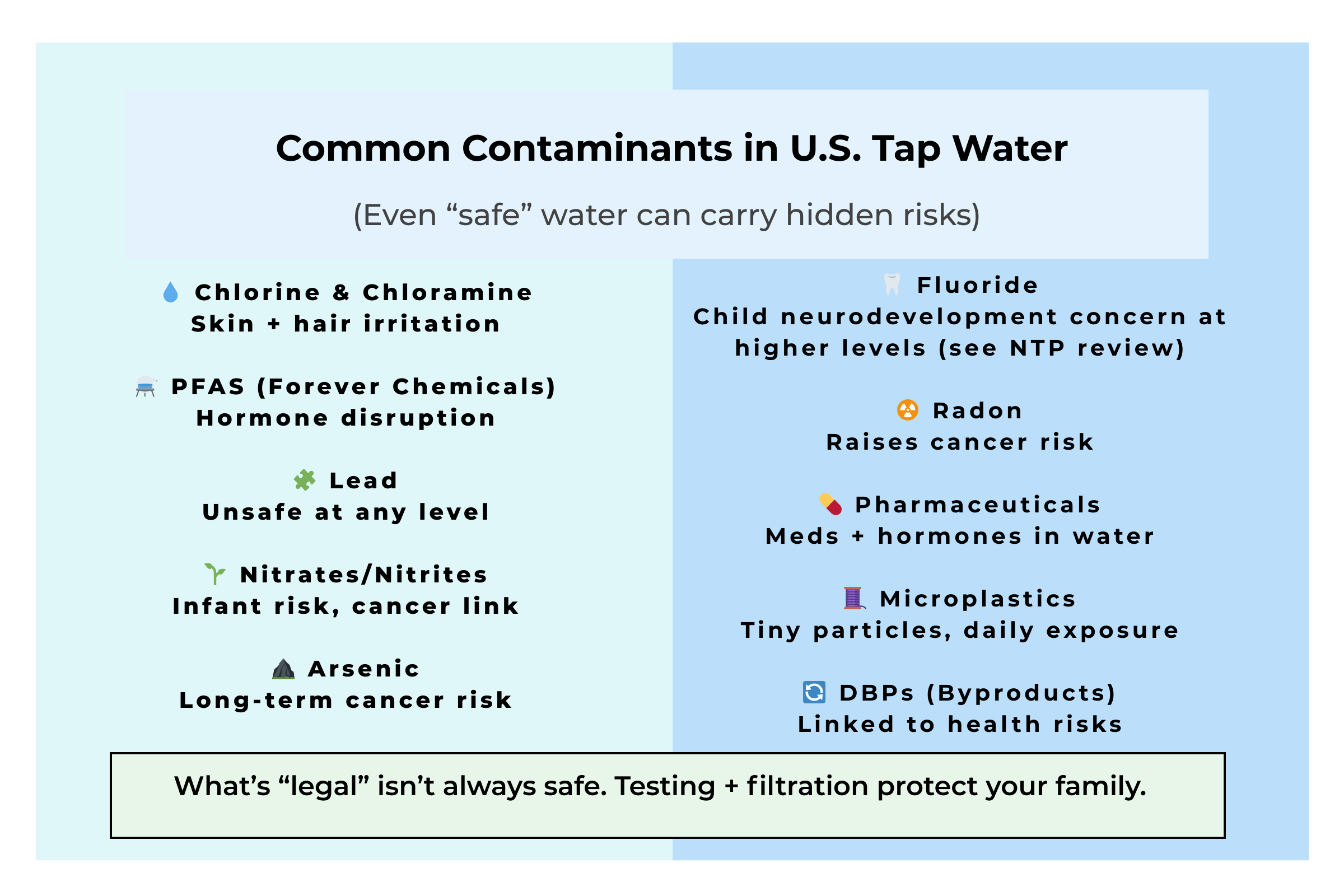
Chlorine & chloramine: While chlorine keeps germs out of tap water, it can strip natural oils from skin and hair with repeated exposure¹.
PFAS (per- and polyfluoroalkyl substances): These “forever chemicals” don’t just wash away. They linger in the body, adding to your family’s toxic load. The EPA warns they’re linked to health risks no parent wants to gamble with².
Lead: Lead is one of the scariest contaminants because no level is safe for your kids. It often sneaks in through older pipes or fixtures, and even tiny amounts can affect learning and development³.
Fluoride: Added to water to prevent cavities, fluoride strengthens tooth enamel and has been a cornerstone of public health. While it’s considered safe at recommended levels (0.7 mg/L in the U.S.), emerging research suggests that fluoride levels above 1.5 mg/L may affect neurodevelopment in children—particularly during pregnancy, infancy, and early childhood when the brain is rapidly developing⁴. The National Toxicology Program found no evidence of cognitive effects in adults. Many families with young children choose to filter fluoride from drinking water to control their children’s total exposure, especially since effective cavity protection can be achieved through topical fluoride in toothpaste or fluoride-free alternatives like hydroxyapatite (a naturally occurring mineral that makes up tooth enamel and can help remineralize teeth).
Nitrates/Nitrites: Often from fertilizer runoff, these contaminants are especially dangerous for infants. Long-term exposure has been linked to certain cancers⁵.
Arsenic: Found naturally in some groundwater, arsenic is tied to cancer risk over time. It’s not something you want showing up in your family’s glass⁶.
Radon: A naturally occurring gas that can dissolve into groundwater. The EPA warns it raises cancer risk if it makes its way into drinking water⁷.
Pharmaceutical traces: USGS studies show residues of medications and hormones in water supplies. Even tiny doses, day after day, can add up⁸.
Microplastics: Microscopic plastic particles detected in 83% of tap water samples worldwide and in bottled water⁹. Recent research has found microplastics in human tissues including blood vessels, lungs, and placenta. A 2024 study published in the New England Journal of Medicine found microplastics in cardiovascular plaques were associated with doubled risk of heart attack and stroke in patients with existing heart disease¹⁰. Research has also linked microplastic exposure to inflammation, oxidative stress, and gut microbiome disruption. While scientists continue studying long-term health impacts, advanced filtration systems like reverse osmosis and nanofiltration can effectively remove these particles.
Disinfection byproducts (DBPs): These form when chlorine reacts with natural organic matter. Some DBPs are linked to long-term health risks¹¹.
👉 What passes as “safe” on a city report may not be the kind of safe that meets your standards.
What’s at Stake for Your Family

Families don’t always link sensitive skin or stomach troubles to water contaminants — sometimes not until years later.
Skin irritation: Chlorine strips natural oils, while heavy metals can worsen eczema and trigger irritation. Your skin is the body’s largest organ, and it often shows the first signs when something’s wrong.
Gut disruption: When heavy metals or other contaminants disturb your microbiome, the balance of good bacteria shifts. And when your gut is out of balance, digestion struggles, immunity weakens, and your whole body feels the ripple effect.
Immune stress: If your body’s natural defenses are constantly dealing with contaminants, your immune system spends its energy on daily challenges instead of protecting long-term health.
Chronic risks: PFAS have been linked to hormone disruption², while lead exposure affects neurological development in children³. Emerging research on microplastics shows associations with cardiovascular concerns and inflammation¹⁰.
👉 Daily exposure adds up. The body can only eliminate so much before concerns begin to show — often on your skin first.
A Smarter Way Forward
That’s where household water filtration systems come in. With the right system, you can give your family peace of mind that every sip (and every shower) supports health instead of undermining it.
And here’s the good news: filtration technology has come a long way. What used to be a luxury is now within reach, with options that even target contaminants we didn’t know to test for a decade ago — like microplastics and pharmaceuticals.
Your Step-by-Step Plan
Test your water. Start with your city’s annual water report (usually online). For a closer look, pick up an at-home kit or mail a sample to a certified lab. Testing helps you zero in on the right system for your home.
Learn the risks. Chlorine can dry skin and hair. Lead is unsafe in any amount. PFAS build up in the body. Arsenic, nitrates, radon, and even pharmaceuticals can slip through unnoticed. Microplastics are increasingly being found in human tissues. Knowing what you’re dealing with makes all the difference.
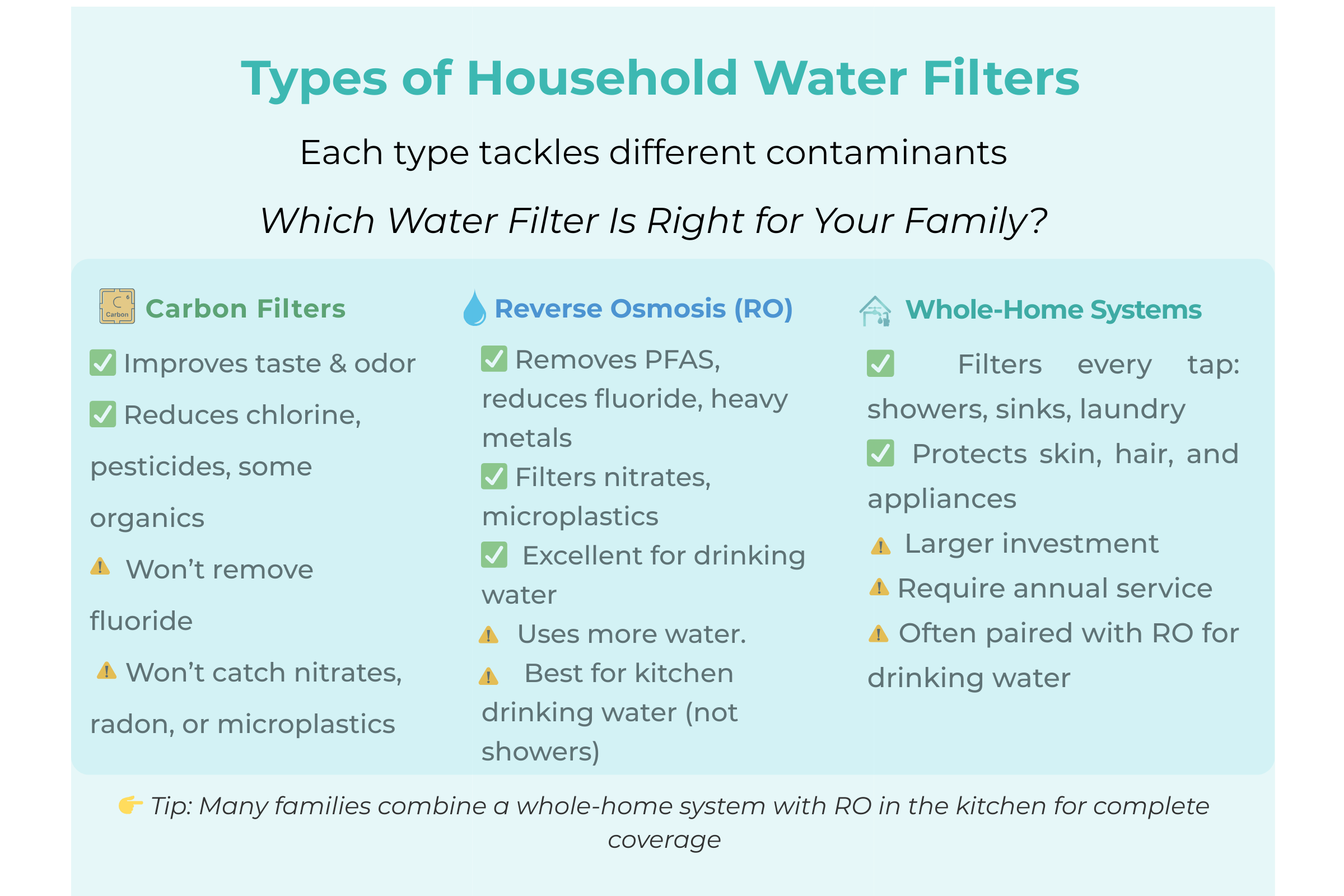
Explore filter types:
For fluoride, recent systematic reviews from the National Toxicology Program and others have found associations between higher levels in drinking water and small but measurable differences in children’s IQ and other neurodevelopmental outcomes, particularly when exposure occurs during pregnancy and early childhood.⁴
Research in this area is ongoing, and findings vary depending on exposure levels and study design, which is why some families choose targeted filtration for drinking water.
• Carbon filters: Improve taste and reduce chlorine, pesticides, and some organics. Won’t catch everything — like fluoride, nitrates, or radon.
• Reverse osmosis systems (RO): Highly effective for drinking water, filtering out PFAS, fluoride, heavy metals, nitrates, microplastics, and more.
• Whole-home filtration: Runs through every tap in the house — from the shower to the kitchen sink — so even your laundry and dishes benefit from cleaner water. I made the investment for my family, and while it requires a simple annual service and filter change, the benefits go beyond health. A whole-house system protects your family’s wellness — and as a bonus, it helps extend the life of your home’s fixtures and appliances.
Choose what fits. Some filters even customize based on your ZIP code, tailoring protection to what’s most common in your area.
💡 About microplastics: Basic carbon filters won’t catch them, but reverse osmosis and nanofiltration systems can effectively remove these particles from your drinking water.
The Transformation: From Worry to Confidence
Water filtration is more than clear water — it’s about creating a healthier, safer home that protects your family from unseen risks and gives you peace of mind.
Imagine turning on your tap and knowing exactly what’s in your glass. Or stepping into the shower without worrying about chlorine drying out your kids’ skin.
The shift is simple but powerful: from uncertainty → to confidence.
👉 Your family deserves water that’s truly safe — not just “good enough.”
FAQs About Water Filtration
Do water filters remove microplastics?
Not all of them. Basic carbon filters won’t catch microplastics, but advanced systems, such as reverse osmosis (RO) and nanofiltration, can. Some whole-home systems even pair with these technologies, so you’re covered from both the big stuff and the tiny particles.
If I have a whole-home filter, do I still need reverse osmosis?
It depends on your priorities. A whole-home system runs through every tap — covering showers, laundry, and dishes. RO systems are best for drinking water, since they filter out even smaller contaminants like PFAS, fluoride, and microplastics. Many families choose both: a whole-home system plus RO in the kitchen.
How often do filters need to be replaced?
It depends on the system and the quality of your water. Small filters may last just 3–6 months, while larger whole-home systems often need a change only once a year. Fresh filters matter: if you let one go too long, it simply stops working the way it should.
What’s the difference between carbon, RO, and whole-home filters?
• Carbon filters improve taste and reduce chlorine (and some pesticides).
• RO systems filter a broad spectrum of contaminants, including heavy metals, PFAS, nitrates, fluoride, and microplastics.
• Whole-home systems cover every faucet and shower, protecting both skin and drinking water.
How do I know what’s in my tap water?
Start with your city’s annual water report. For more details, pick up an at-home test kit or mail a sample to a certified lab. That way, you’ll know exactly which system is right for your household.
What is hydroxyapatite and how does it compare to fluoride?
Hydroxyapatite (n-HAp) is a naturally occurring mineral that makes up 97% of tooth enamel. Recent research shows that toothpastes containing nano-hydroxyapatite can be as effective as fluoride toothpastes at preventing cavities and remineralizing teeth¹². It works by filling in microscopic defects in enamel, remineralizing early tooth decay, and creating a smooth surface that resists plaque buildup. For families with young children who may swallow toothpaste, hydroxyapatite offers effective cavity protection without concerns about fluoride ingestion during critical developmental years.
👉 For your family’s health, these details really do matter.
Take Charge of Your Family’s Water Safety Today
The right filtration system means every sip and shower supports your health — and your peace of mind.
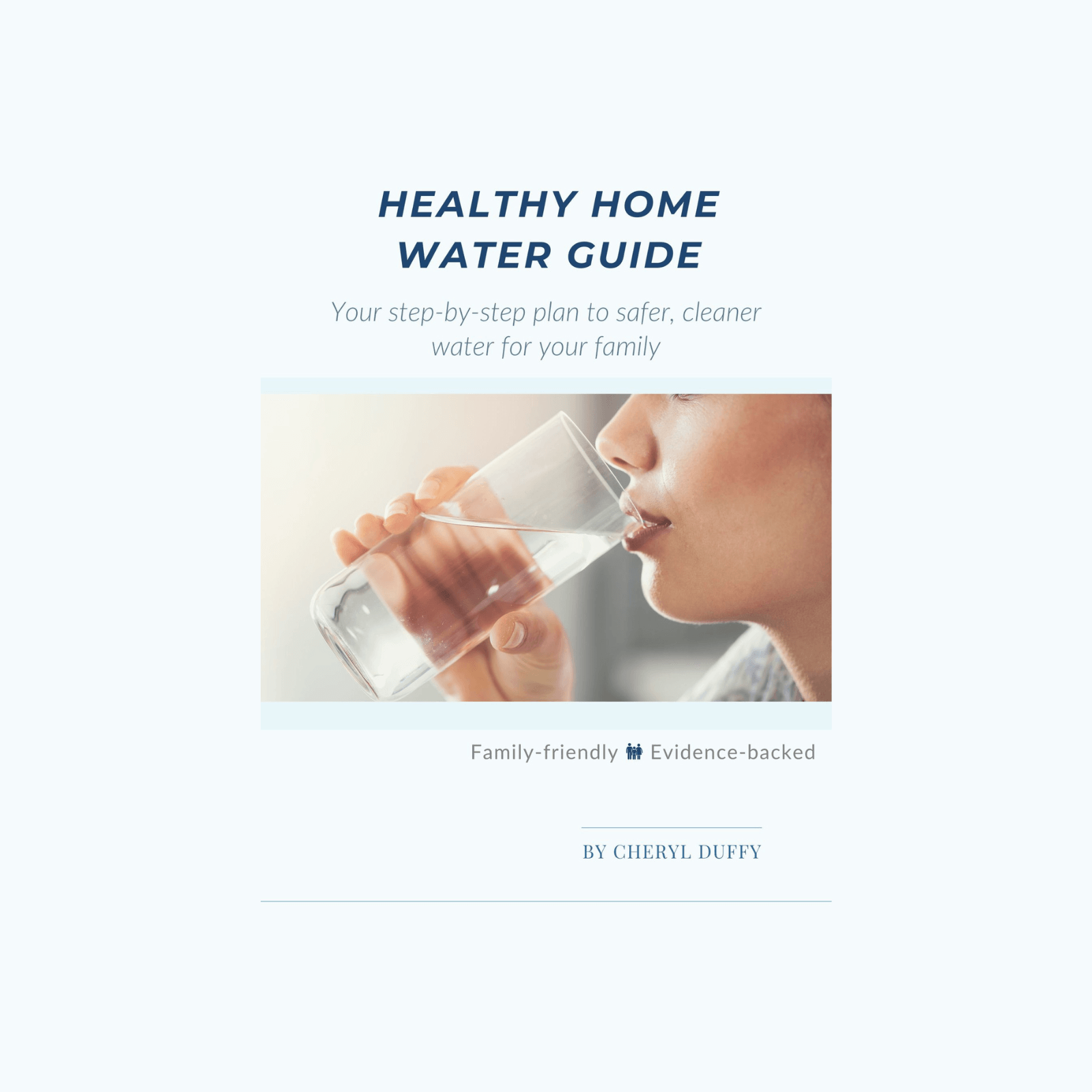
👉 Ready to take the next step? Download the Healthy Home Water Guide and get clear, practical guidance on choosing the right system for your family’s needs.
And if you’re looking for other simple ways to reduce toxins at home, don’t miss our post on natural laundry swaps — because small changes add up to a healthier home.
Additional Resources
Testing & Information:
• EPA’s Drinking Water Information
• Find Your Local Water Quality Report
• EPA Safe Drinking Water Hotline: 1-800-426-4791
Filter Certification:
• NSF International - Water Filter Standards
• Understanding NSF/ANSI Certifications
For Parents:
• CDC’s Water Quality & Health
• Fluoride-Free Toothpaste Research Overview
References
1. CDC – Disinfection with Chlorine & Chloramine
3. EPA – Lead in Drinking Water
4. National Toxicology Program – Fluoride Exposure: Neurodevelopment and Cognition
5. EPA – Nitrates and Nitrites in Drinking Water
6. CDC – Arsenic in Drinking Water
7. EPA – Radon in Drinking Water
8. USGS – Pharmaceuticals, Hormones, and Other Organic Wastewater Contaminants